The Safe Case: Staking and Restaking


Jorge Selva & Safe
Staking is a crucial component of maintaining security and smooth operations within the Ethereum ecosystem as well as many other networks. It not only provides a way to validate transactions and secure the network, but it also offers other benefits to participants including aligning economic incentives, long-term value accrual, supporting ethereum's development and much more.
Since Ethereum's migration from Proof-of-Work to Proof-of-Stake, many new ways for the ecosystem to participate in securing the network have emerged. From liquid staking providers, improved infrastructure providers, and now the emergence of restaking from providers such as EigenLayer, the importance of staking and restaking will only continue to grow.
In this post, we'll cover why Safe Accounts should be at the core of staking strategies for individual and institutional players. We’ll also highlight some examples from around the Safe Ecosystem of production-ready products and tooling.
Why Smart Staking Matters
Naturally, security is a primary concern for any self or institutional staker. Poorly managed staking exposes crypto holders to risks such as hacks, operational penalties in the form of slashing, and more. These can be mitigated through quality vendor selection and enabling multi-factor authentication and the selection of reputable validators. Efficient staking practices not only maximize returns but also strengthen the blockchain's security, establishing a foundation for a thriving crypto network.
The Advantages Safe Provides to Stakers
Safe Accounts provide a superior alternative to traditional Externally Owned Accounts (EOAs) for staking setups, for many reasons including:
Multi-Signature Security
Enhanced Control and Customization
Module Integration
Batch Transactions
Improved Recovery Options
And more
Staking on Ethereum and other Networks
Safes can be used to natively stake tokens within the Ethereum, Base, Avalanche, and other networks.
Safe offers fully audited, formally verified security for validator rewards and simplifies the management of staking assets. Safe Accounts come with multi-signature (multisig) capabilities, as well as other easily customizable access features such as adjustable roles for different administrators, automated distribution processes, and more. This way, no single key can serve as a point of failure.
Considering withdrawal addresses can be set only once, it is crucial to establish a future-proof address that permits re-assigning signing keys in case of a compromise or if you need to migrate your security setup.
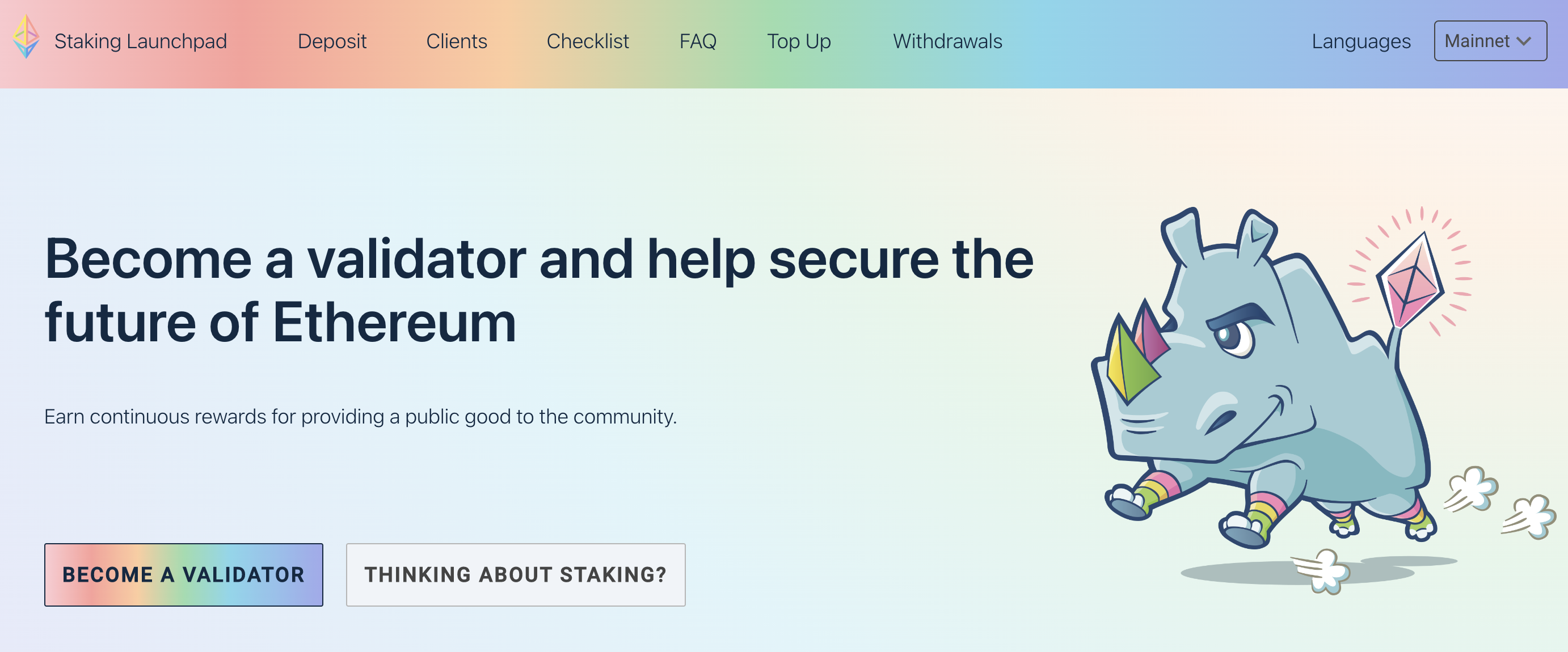 Use your Safe as your withdrawal address on the Ethereum Staking Launchpad
Staking Services
Other staking services also provide a seamless way to incorporate Safe as part of your setup. Many of the existing staking services are also available directly from the Safe App Store.
Stakefish supports staking for Ethereum using Safe. This setup adds an additional layer of security by requiring multiple signatures for staking transactions, enhancing the security of the staking process .
 Stake.fish illustration of a padlock with multiple colored keys supporting Ethereum multisig staking
Lido allows users to stake across many networks, minting transferable tokens that earn staking rewards while remaining usable for other on-chain activities. Users can stake Ethereum using Safe, allowing them to stake ETH and receive stETH, which represents the staked Ethereum plus daily staking rewards.
Rocket Pool allows both liquid staking using rETH. and staking as a node operator, both using Safe to elevate security.
Kiln enables Safe users to stake ETH on dedicated validators simply and securely, while also adding exposure to the restaking protocol, Eigenlayer.
Restaking
Restaking allows stakeholders to automatically reinvest staking rewards to enhance their compounded returns over time. Users can restake their $ETH while extending cryptoeconomic security to additional applications on the network. The potential of new protocols, such as EigenLayer, lies in the ability to aggregate and extend cryptoeconomic security through restaking.
Using Safe, stakeholders can integrate restaking processes within a secure environment. For the reasons previously mentioned, Safe is already being used on platforms such as Kiln and p2p.org to provide better infrastructure for staking/restaking strategies.
DAOs and Governance Tokens
On Synthetix, users can can stake SNX tokens using Safe, allowing users to participate in minting and burning sUSD, and claiming staking rewards while benefiting from the security of Safe.
 Synthetix grantsDAO post header announcing staking SNX is now available for Gnosis Safe wallets
Staking a More Secure Future
Staking and restaking remain essential cryptoeconomic primitives, integral to transaction validation, network security, and long-term protocol sustainability. As exciting new staking developments evolve and further shape the ecosystem, a robust and secure modular smart accounts infrastructure goes hand-in-hand to bolster network resilience.
From seamless integrations with diverse staking protocols to ensuring future-proof management, the role of smart accounts in the staking landscape provides the non-negotiable security and modularity for all stakeholders — from institutions to DAOs and individual network participants — all making their stake as contributors to the larger health and vitality of the network.
Follow Us!
Work with Safe
Share this